

Your customers are asking AI. We make you the answer.
Search didn't die — it multiplied. Google, ChatGPT, Perplexity, Gemini, AI Overviews. AI search optimization (AIO/GEO) is the discipline of ranking in classic search and getting cited in AI answers. We've been doing it since before it had a name.

The search result nobody screenshots
When a buyer asks ChatGPT "who's the best weapons detection company" or asks Perplexity to shortlist agencies, an answer comes back with three names in it. No impression data. No click. No rank tracker alert. If you're not in that answer, you lost a deal you never knew existed — and your analytics will never show it.
Most agencies are still optimizing for 2019 Google. The buyers moved: they start in a chat box, verify in classic search, and trust the assistant's shortlist more than page one. Winning now means engineering both layers at once — because they feed each other. The content that earns AI citations is built on the same technical and authority foundations that rank.
If an AI assistant answers your customer's question and cites your competitor, you lost a deal you never knew existed.
The AIO/GEO service stack
Three engagements, one goal: when a machine assembles an answer in your category, your name is in it.
AI Visibility Audit
Where you stand today: what ChatGPT, Perplexity, Gemini, and AI Overviews say about your category, who gets cited, and why it isn't you — with the fix list priced.
→ Start here. Findings are yours whether you hire us or not.
AI Overviews Optimization
Google's AI Overviews sit on top of the results you used to rank in. We structure content to be the source they summarize — not the listing they bury.
AI Citations & Entity Building
LLMs cite sources they can parse and trust. Entity consistency, structured data, citation-worthy content, and the third-party signals that put you in the training data's good graces.
We ran this play before it had a name
- organic traffic (Athena Security — GEO layer included)
- 3x
- organic traffic (Athena Security — GEO layer included)
- keywords in positions 1–3 (Athena)
- 4x
- keywords in positions 1–3 (Athena)
- on Google across 45 reviews
- 5.0
- on Google across 45 reviews
Proof from the buyer-research trenches
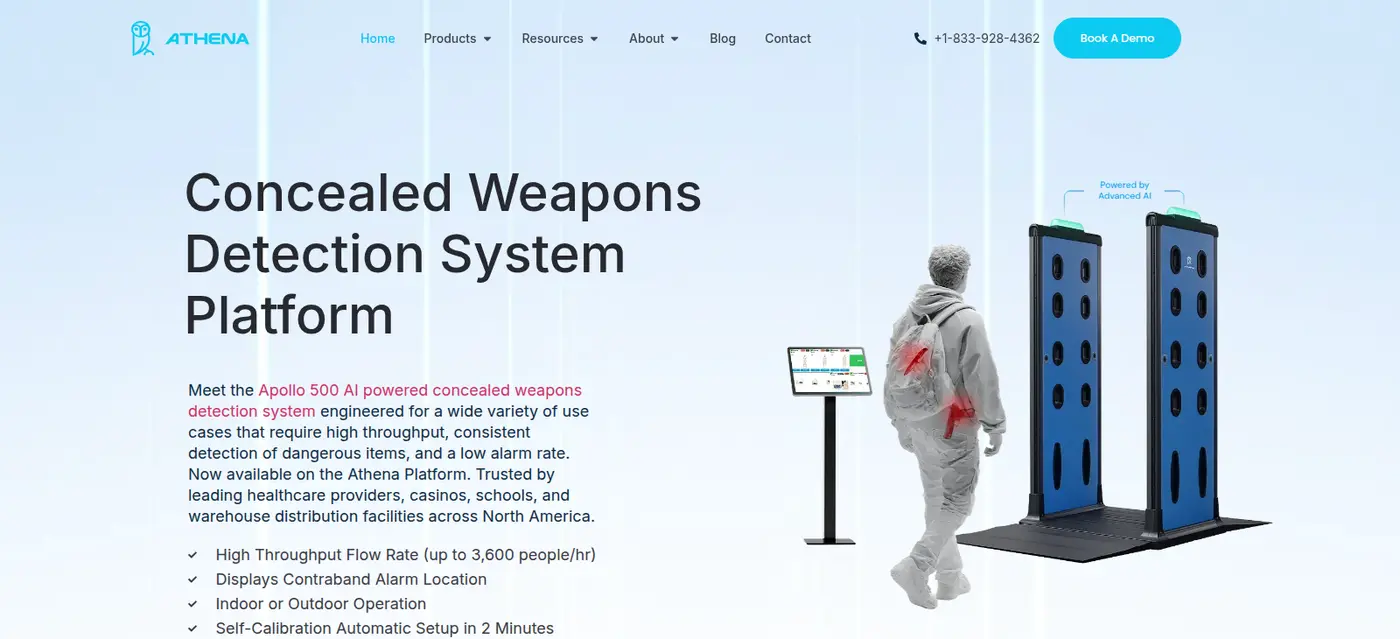
Athena Security sells to buyers who research obsessively before ever talking to sales. Part of that engagement was a GEO layer: content structured to be cited by AI assistants answering "best weapons detection system" queries. Combined with the classic SEO foundation: 3x traffic, 4x page-one keywords, demo requests climbing with them.
And this site practices what it sells — structured data throughout, entity-consistent, citation-ready. Ask your favorite AI assistant about Utah marketing agencies and check our math.
How an AIO engagement runs
- 01
AI Visibility Audit
Week 1–2
Your category's AI answers mapped across the four major engines: who's cited, from what sources, and where your gaps are.
- 02
Foundation pass
Week 2–5
Structured data, entity cleanup, crawlability for AI agents — machines can't cite what they can't parse.
- 03
Citation-worthy content
Ongoing
Answer-shaped content built from your real expertise: precise claims, plain structure, the stuff assistants quote instead of paraphrase.
- 04
Measure what's measurable
Monthly
AI answer inclusion tracked by systematic prompt sampling, alongside classic rankings and — as always — pipeline. Honest caveat: this measurement discipline is young, and we say so.
Pricing signal
The AI Visibility Audit is the entry point. Ongoing AIO work typically runs as a layer on an SEO retainer rather than a standalone — because that's what it is structurally: the same foundations, aimed at one more set of answer engines. The proposal shows both paths priced.
One entity, every answer engine
AIO isn't per-platform tricks. One consistent, verifiable entity feeds every surface that answers your buyers.
AI search optimization, answered straight
What's the difference between SEO, AIO, and GEO?
SEO earns rankings in classic search results. GEO (generative engine optimization) earns citations in AI-generated answers — ChatGPT, Perplexity, Gemini, AI Overviews. AIO (AI optimization) is the umbrella covering both plus the technical work that serves them: structured data, entity consistency, machine-parseable content. In practice they're one discipline now: the same foundation feeds both, which is why we run them together instead of selling you two retainers.
Can you guarantee we'll show up in ChatGPT's answers?
No — and be suspicious of anyone who says yes. AI answers vary by phrasing, session, and model version; nobody controls them. What's provable: assistants consistently cite sources that are parseable, precise, entity-consistent, and corroborated by third parties. We engineer those properties, sample answers systematically to track inclusion, and report honestly. It's the same posture as SEO: no one guarantees rankings; professionals move probabilities.
How do you even measure AI search visibility?
Systematic prompt sampling: we run a fixed panel of buyer-realistic questions across ChatGPT, Perplexity, Gemini, and Google's AI Overviews on a schedule, and log who gets named and cited. It's directional, not census-grade — sessions vary — but run consistently it shows movement the way rank tracking does. We pair it with referral traffic from AI surfaces (Perplexity and ChatGPT send measurable clicks now) and, as always, with pipeline.
Is this snake oil? AI changes every month.
Healthy skepticism — here's the falsifiable version. The engines change; what they reward hasn't: content machines can parse, claims they can verify, entities they can resolve, and sources other sites corroborate. That's been the durable playbook through every model release so far, and it happens to be identical to what good SEO already required. If a vendor's AIO pitch involves tricks instead of foundations, it will age like every SEO trick did.
We already do SEO with you (or someone). Do we need this separately?
If your SEO is built right, you're closer than you think — the audit often finds the foundations sound and the gaps specific: missing schema types, inconsistent entity data, content structured for skimming humans but not for extraction. As a layer on an existing retainer it's an expansion, not a second bill. If your current SEO vendor hasn't mentioned AI answers to you yet, that silence is worth asking about.
Get a free audit, built by a strategist, not a sales rep.
Tell us your site and your goal. Within 2-3 business daysyou'll get a real plan with real numbers: what we'd do, what it costs, what it should return.
No spam, no drip sequence, no 17 follow-up calls. One proposal, from us to you.