

SaaS marketing: win the research trail your sales team never sees.
Your buyer does most of the evaluation before talking to sales — reading comparison pages, pricing teardowns, G2 reviews, and asking ChatGPT to shortlist vendors. If you're not present in that trail, the shortlist forms without you.

The deal is decided before the demo
SaaS buying is a months-long, committee-driven research project. A champion builds a shortlist, a skeptic hunts for reasons to cut it, and procurement wants receipts. Every one of them searches differently — and increasingly, they ask an AI assistant to do the first pass for them.
That changes the marketing job. Brand awareness is nice; being the cited answer when someone asks "best [your category] for mid-market" is pipeline. We build SaaS programs bottom-of-funnel first: the comparison, pricing, and alternative queries that shape shortlists — then work upward.
Nobody buys software from an ad. They buy from a shortlist — and the shortlist is built from search results and AI answers.
How SaaS buyers actually search
"[Competitor] alternatives." "[Category] pricing." "[Your product] vs [their product]." "Best [category] for [industry]." These queries scream purchase intent, and most SaaS companies cede them to review aggregators and affiliate listicles.
The AI layer raises the stakes: when a buyer asks ChatGPT or Perplexity to compare vendors, the answer is assembled from content that machines can parse and trust. Structured comparisons, honest spec tables, and real documentation get cited. Marketing fluff doesn't. That's GEO, and it's the same discipline that took Athena Security from thin visibility to owning its category's research queries.
What we run for SaaS and technology clients
Bottom-of-funnel SEO
Comparison pages, alternatives pages, pricing content, and integration pages — the queries that build shortlists. → SEO Services
GEO / AI citations
Content structured so AI assistants cite you when buyers ask for vendor shortlists — the new analyst report.
PPC with pipeline math
Paid search on high-intent category and competitor terms, tracked to opportunities, not MQLs-that-go-nowhere. → PPC
Content from expertise
Engineering and product knowledge extracted into content buyers trust — not AI slop about "digital transformation." → Content Marketing
Web development
Fast, credible marketing sites built to convert committee traffic — like ConnectUs Corp, structured for the procurement teams who vet vendors before they email.
The agency behind the work
- organic traffic (Athena Security, B2B tech)
- 3x
- organic traffic (Athena Security, B2B tech)
- keywords in positions 1–3 (Athena)
- 4x
- keywords in positions 1–3 (Athena)
- on Google across 45 reviews
- 5.0
- on Google across 45 reviews
Proof from a high-consideration B2B category
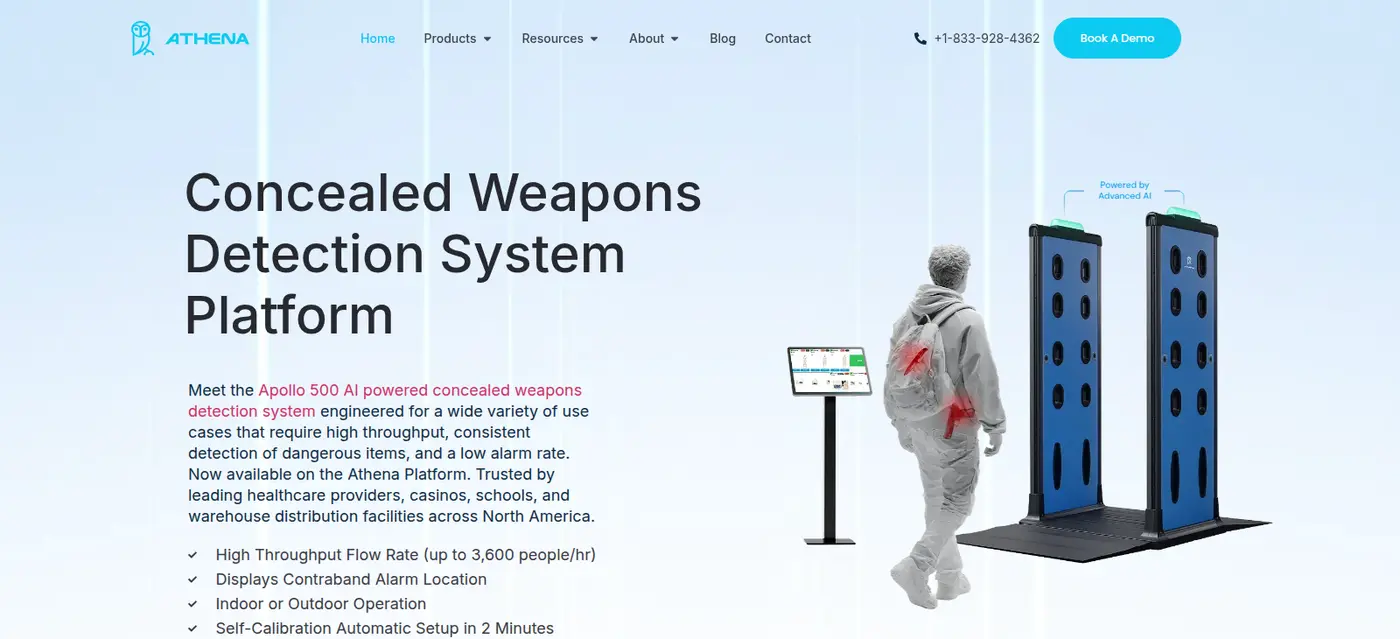
Athena Security sells AI-powered weapons detection to schools, hospitals, and venues — long cycles, obsessive research, committee decisions. Bottom-of-funnel first: 3x organic traffic, 4x keywords in positions 1–3, and organic demo requests climbing with them.
Portfolio: ConnectUs Corp — a national IT and managed mobility firm whose site is structured for the procurement teams who vet vendors before they ever email.
Every surface that answers your buyers
One consistent, verifiable presence feeds every channel a buyer checks before calling.
SaaS marketing FAQs
Should we target "[competitor] alternatives" keywords — and does it work?
Yes, and it's usually the highest-intent content a SaaS company can publish. Buyers searching alternatives are actively assembling a shortlist — often unhappy with an incumbent. The page has to be honest to work: real feature comparisons, real pricing context, and a clear-eyed take on who each tool actually fits. Puff pieces get bounced; honest comparisons get cited — by buyers and, increasingly, by the AI assistants doing the first pass of vendor research.
How do we get cited when buyers ask AI tools for vendor shortlists?
AI assistants assemble shortlists from content they can parse and sources they trust: structured comparison pages, spec tables, documentation, third-party reviews, and consistent entity signals across the web. We build that layer deliberately — schema, comparison structures, citations-worthy content — the same GEO discipline we ran for Athena Security before the practice had a name. Being uncited in AI answers is this decade's version of being on page three.
We already do content marketing. Why isn't it producing pipeline?
Almost always because it's top-of-funnel content in a bottom-of-funnel war. Thought-leadership posts don't build shortlists; comparison, pricing, alternatives, and integration pages do. The fix isn't more content — it's inverted priorities: cover every query a buyer asks in the last two weeks before a demo request first, then earn the broader topics. That inversion is exactly what we ran at Athena, and it's why demo requests moved, not just traffic.
How long until SEO produces qualified SaaS pipeline?
Bottom-of-funnel pages can rank and convert in 60–90 days when the technical foundation is sound, because they target lower-competition, higher-intent queries. Category-level terms take quarters, not weeks. That's why sequencing matters: BOFU first pays for the patience the head terms require. You'll see the roadmap with expected movement by month 1, 3, and 6 before we start — and PPC can cover the high-intent terms while organic climbs.
Do you understand [our niche] — vertical SaaS, dev tools, PLG?
The buying motion matters more than the niche. Committee-driven enterprise sales, product-led growth with self-serve signup, and developer tools with docs-driven adoption each search differently, and the content mix follows: procurement-ready proof for committees, friction-free comparison content for PLG, and genuinely technical documentation for developers (who punish marketing fluff hardest). The audit maps your actual buyer motion before we write a word.
Get a free audit, built by a strategist, not a sales rep.
Tell us your site and your goal. Within 2-3 business daysyou'll get a real plan with real numbers: what we'd do, what it costs, what it should return.
No spam, no drip sequence, no 17 follow-up calls. One proposal, from us to you.