

Real estate marketing: concede the listing war, win the agent war.
Here's the uncomfortable truth: you will not outrank Zillow for listings, and you shouldn't try. Buyers use portals for inventory — but they hire people.

Portals own the inventory. The trust searches are still open.
The searches that pick an agent — "best realtor in [city]," "should I sell my house now," neighborhood guides — are winnable, because portals are structurally bad at them. Zillow can show every listing in your market. It cannot know which street floods, which school boundary just moved, or what your last twelve sellers netted over asking. You can.
Real estate marketing done right concedes the listing war and wins the trust war. It's the same structural fight our home services clients face with lead aggregators: a middleman ranks above you and resells your own market back to you as "leads." The answer there wasn't buying more leads. It isn't here either.
Buyers browse portals. They hire people.
How real estate clients actually search
- Agent-selection queries: "best realtor in [city]," "top listing agent near me" — the searches that pick a person, not a property. Reviews, local proof, and a real profile decide them.
- Timing queries: "should I sell my house now," "is it a buyer's market in [city]" — sellers research for months before they call anyone. The agent whose content answered them owns the first conversation.
- Neighborhood queries: "[neighborhood] schools," "moving to [city] guide" — portals answer these with generic data. A local expert answers them with judgment. Guess which one earns the listing appointment.
- AI answers: buyers and sellers now ask ChatGPT how to choose an agent and what their home might be worth. Agents with structured local expertise get cited; agents with a headshot page don't.
What we run for real estate clients
Local SEO for agent-selection searches
Google Business Profile, reviews, and local pages built to win "realtor near me" and "[city] listing agent" — the queries portals can't personally answer.
Neighborhood and market content
Neighborhood guides, market updates, and "should I sell" content that owns the months-long research phase before a seller picks up the phone.
Review generation
Systematic asks after every closing. In a referral business, public proof compounds faster than private word of mouth.
PPC on seller intent
Seller-intent queries — "home value," "sell my house [city]" — geofenced to your farm area and tracked to listing appointments, not clicks.
A site that outperforms your brokerage page
Your own domain, your own proof, your own leads — a portable asset that follows you between brokerages.
The playbook, proven against aggregators
- quote-request pipeline for Adkins & Sons Windows
- 10x
- quote-request pipeline for Adkins & Sons Windows
- organic traffic across every Shutter House location
- 3x
- organic traffic across every Shutter House location
- stars across 45 Google reviews
- 5.0
- stars across 45 Google reviews
Proof: winning local markets against aggregators
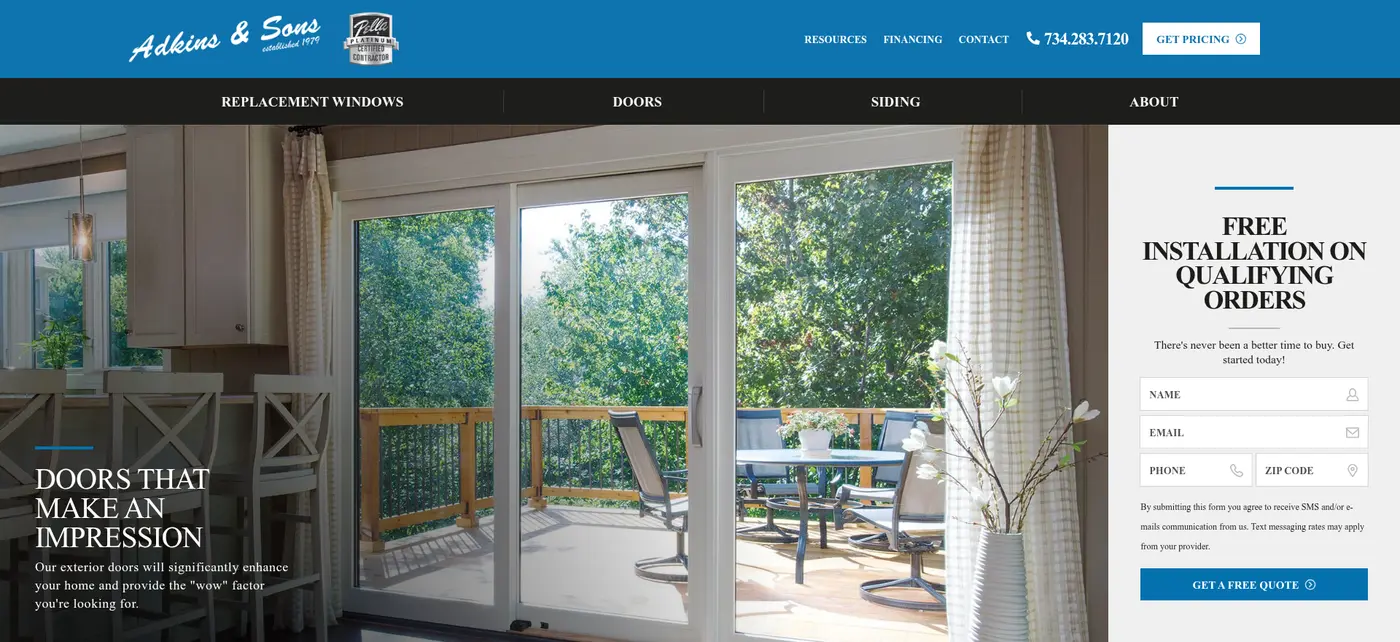
The structural fight agents face with portals is one we've already won elsewhere. Adkins & Sons Windows was outranked by lead-gen aggregators reselling its own market — ten months of local-first work later, pipeline was 10x. The Shutter House tripled organic traffic across every location with a multi-location architecture rebuild. Same middleman problem, same answer: outrank them where they're weak — locally.
Every surface that answers your buyers
One consistent, verifiable presence feeds every channel a buyer checks before calling.
Real estate marketing FAQs
How much should an agent or team spend on marketing?
Work it back from commission math: what one additional closing is worth to you, and what you currently pay per closed lead through portals and referral fees. Established agents and teams invest at levels that vary widely. The proposal shows the math against your average commission and your market's competition — a solo agent in a small market and a team in a metro need different plans.
How long until we see leads?
PPC on seller-intent queries produces appointments in weeks. Local SEO and neighborhood content compound over three to six months — which matches the market's rhythm, since sellers research for months before calling anyone. We run both: paid catches the sellers deciding now, content earns the ones deciding next spring.
Is it even worth doing SEO when Zillow and Redfin own page one?
For "homes for sale [city]" — no, and any agency that promises otherwise is selling you a fight you'll lose. But portals are weak exactly where hiring decisions happen: "best realtor in [city]," "should I sell now," neighborhood-level questions that need local judgment instead of a database. Those queries are winnable, they convert at listing-appointment intent, and almost no agent in your market is working them systematically.
Should I market myself or rely on my brokerage's marketing?
The brokerage markets the brokerage. Leads route by its rules, the profile page lives on its domain, and everything you build there stays behind when you leave. Your own site, your own Google Business Profile, your own review base — those are portable assets that compound for you across brokerage moves. Use what the brokerage gives you, but never let it be the only place your reputation lives.
What about buying leads from Zillow Premier Agent?
It works the way renting works: pay every month, own nothing at the end. Portal lead prices rise with competition in your zip code, the same lead is often sold alongside other agents, and the review equity you build accrues to the portal's page. Some agents run it as a bridge — fine. But the budget's job is to make your own pipeline the reason you can quit it.
Get a free audit, built by a strategist, not a sales rep.
Tell us your site and your goal. Within 2-3 business daysyou'll get a real plan with real numbers: what we'd do, what it costs, what it should return.
No spam, no drip sequence, no 17 follow-up calls. One proposal, from us to you.